
Introduction
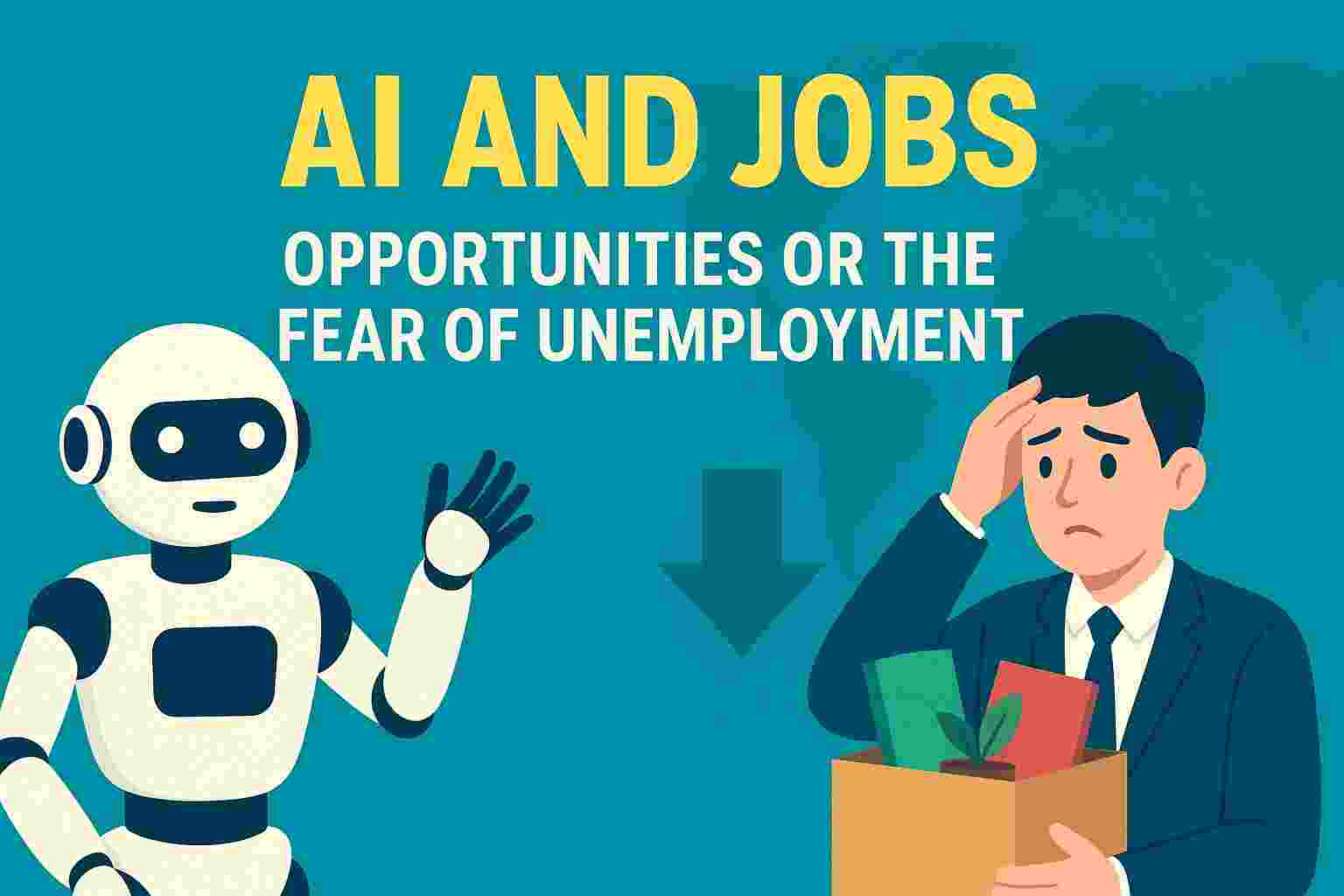
Artificial Intelligence (AI) has become one of the fastest-growing technologies in the modern world. Every industry—education, healthcare, banking, digital services, and more—is adopting AI to improve efficiency and accuracy. Amid this rapid transformation, an important question arises:
Will AI create more job opportunities or increase the fear of unemployment?
This article presents a clean, factual, and balanced explanation of how AI is impacting today’s job market and what the future may look like.
Why Does AI Create Both Fear and Opportunity?
Whenever a new technology enters the industry, it introduces change. AI is no different.
Some people worry that AI will automate many tasks, while others believe it will open fresh opportunities and new career paths.
AI performs repeated and data-driven tasks faster and more accurately. This is why certain job roles may see changes. However, AI is also generating new roles that previously did not exist.
Will AI Reduce Human Jobs?
It would be incorrect to say that AI will eliminate all jobs.
The reality is that AI changes how tasks are performed, and individuals who are willing to learn new skills will benefit the most.
Experts agree that AI leads more toward transformation than replacement.
Jobs That May Decline Due to Automation
These roles usually involve repetitive tasks:
Basic data entry
Routine reporting
Template-based design
Basic customer query handling
AI can perform such tasks quickly, reducing the need for manual work in these areas.
New Job Opportunities Created by AI
AI is not just modifying existing roles but also creating entirely new career paths:
- AI Prompt Engineer
A highly in-demand skill responsible for guiding AI models with effective instructions.
- Machine Learning Specialist
Professionals who train, maintain, and improve AI models.
- Automation Manager
Companies require experts to automate their internal systems and workflows.
- Data Analyst & Data Scientist
AI relies heavily on data, making these roles essential for accurate insights.
- Cyber Security Analyst
As AI grows, the need for advanced digital security increases.
- AI Content Strategist
Content creation, marketing, and digital communication are increasingly using AI-powered tools.
Which Jobs Are Secure in the AI Era?
Jobs that require human creativity, emotional understanding, and decision-making remain secure. AI supports these roles but cannot replace them.
Examples include:
Teaching & training
Medical consulting
Creative content production
Business and project management
Marketing strategy
Technical services
Hands-on skilled jobs
These fields rely on human intelligence, experience, and interpersonal skills.
How AI Creates Opportunities Instead of Challenges
AI increases productivity and simplifies tasks across industries. For example:
Marketing teams use AI to plan campaigns efficiently
Doctors analyze medical reports faster with AI assistance
Content creators use AI for ideas and data insights
Small businesses use AI tools for organization and automation
In short, AI acts as a supportive tool, not a replacement for human expertise.
How to Succeed in the Age of AI
- Learn New Skills
Digital tools, data skills, and AI tools are essential for future growth.
- Embrace Technology
The more effectively you use AI, the more productive and valuable you become.
- Stay Updated
AI evolves quickly, so continuous learning is important.
- Strengthen Your Human Skills
Creativity, communication, and critical thinking give you an advantage AI cannot replicate.
Conclusion
AI and job opportunities are not in conflict.
AI may change certain job processes, but it also opens new doors across industries. Individuals who continue learning and adapt to technological changes will have a brighter and more secure future.
With the right skills and mindset, AI does not eliminate careers—it enhances them.